
Some of what I watched in 2025
(short films)

Albeit delayed, I’ve decided to break up my yearly succinct reflections on the cinema I’ve exposed myself to in two. This is because I do not think one article is enough to reflect on the plethora of films I exposed myself to. So, for the first time, these are the short films I enjoyed engaging with and learning from the most in 2025.
The short films of Ngozi Onwurah
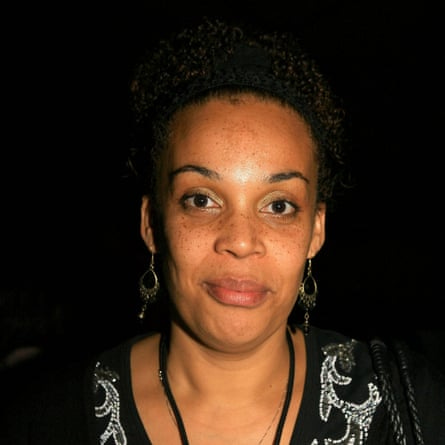
I watched two of Ngozi Onwurah’s films: Flight of the Swan (1992) and The Body Beautiful (1991). I think both films are cathartic tools that helped Ngozi reconcile the dissonance synonymous with her upbringing as a mixed Igbo British-Nigerian that had to flee Nigeria at the onset of the civil war, and they’re marvelous images put on screen. Ngozi’s understanding of composition is much unlike I’ve seen from a Nigerian filmmaker. I plan to watch a lot more of her films this year!


The short films of Agnes Varda
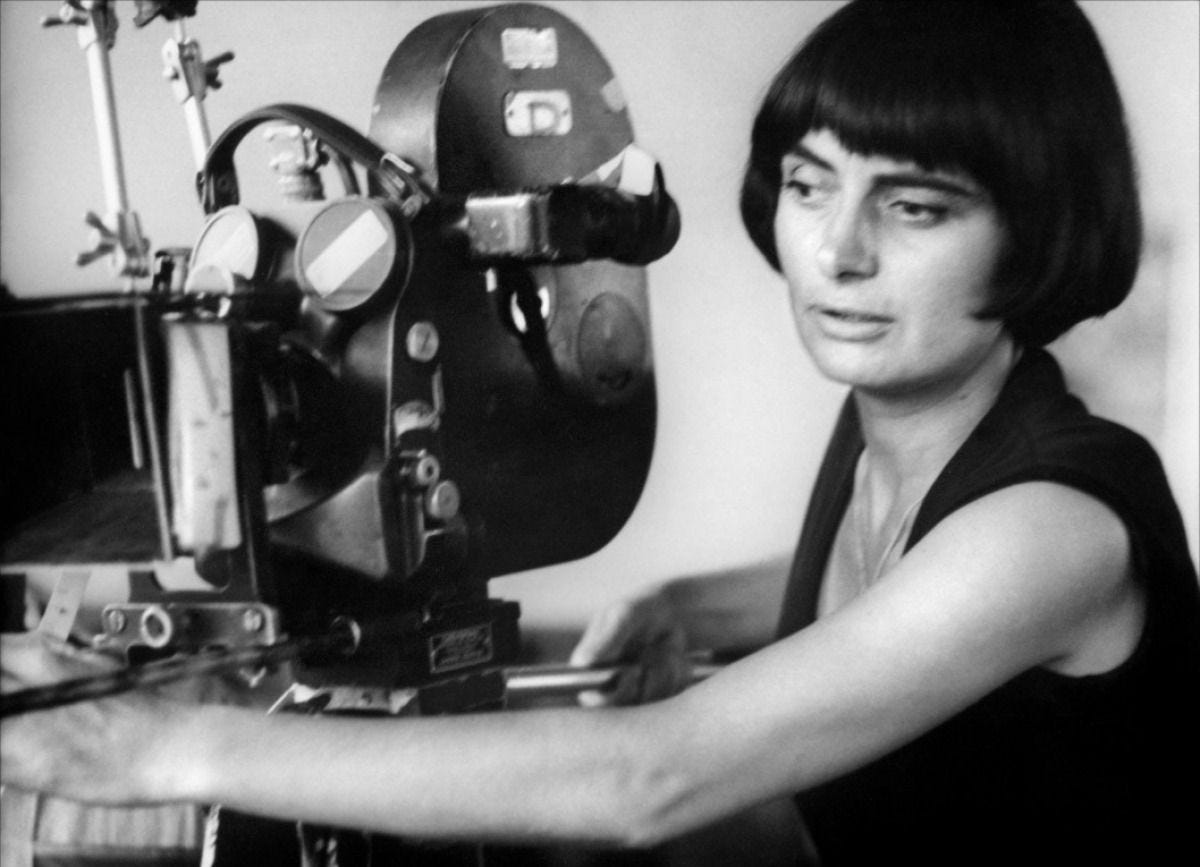
I watched four short films made by Agnes Varda: Uncle Yanco (1967), Black Panthers (1968), Women Reply (1975), and The Pleasure of Love in Iran (1976). Agnes Varda’s short films are a beauty to behold. Through them, she extrapolates her signatory Nouvelle Vague vérité style to films that don’t carry the monetary expectations of a feature film. Agnes thrives within the restrictions of a short and I’m excited to watch more of her work and read about her in 2026.


Thus a Noise Speaks (2012)
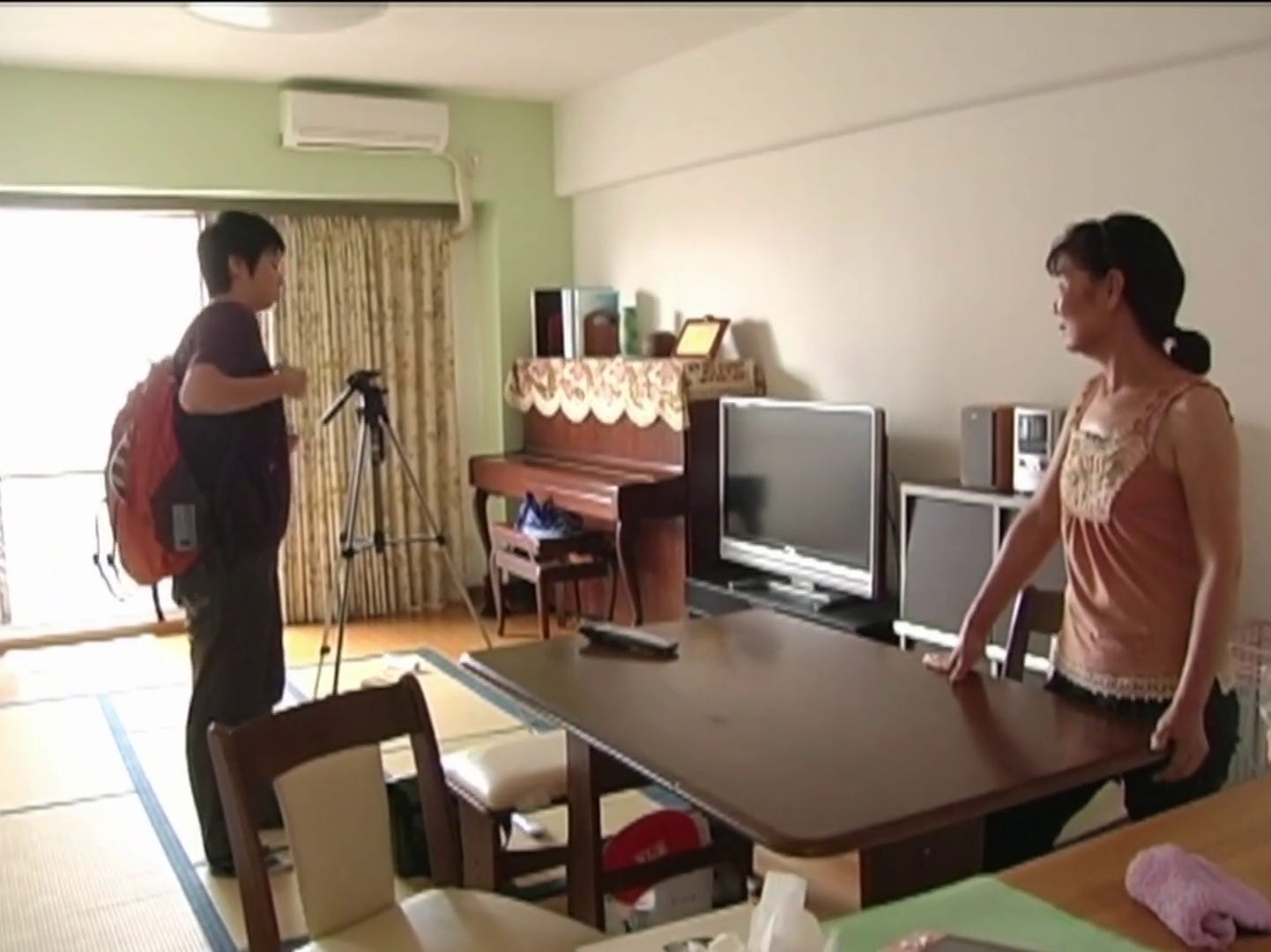
This is a student short film shot with a DVcam about a student filmmaker who comes out as a lesbian to her parents and decides to use a recreation of her coming out story, using her family members as the actors, as a submission for an assignment at film school. It is a bold thing to lay yourself bare before the camera and be judged by the permanence of the moving image. In this film, the filmmaker, Oda Kaori, who acts as the student, just does that. She relives the pain of disapproval and desperately attempts to make her family realize the gravity of their disapproval of her sexuality through layers of recreations. Our hope as the audience is that her efforts were not futile, but ultimately, that doesn’t matter. The scourge of the moving image is its permanence and the pain of rejection is what is captured.
Sea Wall (2012)
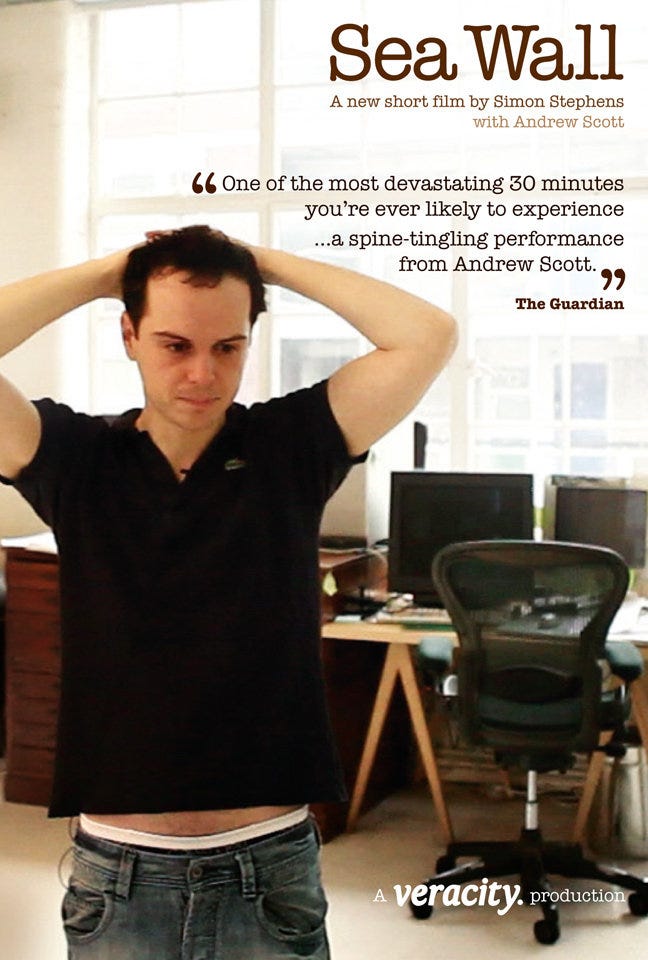
A lowly Andrew Scott stands in front of a camera in an audition room with nothing else but light rigs and himself. He plays a man that relives the moments that led up to his daughter’s death through memories pieced together to give context to a life lived that we simply cannot be privy to within any conceivable runtime. A deconstructed drama of melancholy unlike anything I’ve ever seen. Please watch this.
The short films of Shirley Clarke
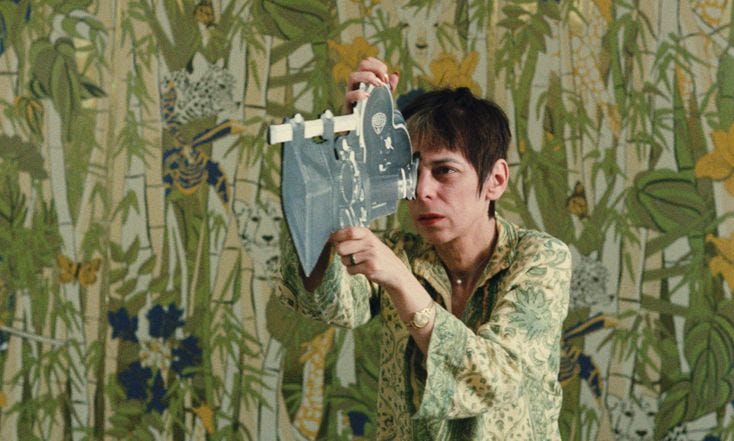
I watched five short films by Shirley Clarke: Bullfight (1955), Four Journeys Into Mystic Time: Trans (1978), Butterfly (1967), 24 Frames Per Second (1977), Dance in the Sun (1953). Shirley Clarke made experimental films and discovering her work is one of the highlights of the year for me. Dance in the Sun was particularly striking. It’s a dance routine performed in different locations and match cut together to paint an image of persistence and elevation to a plane of spatial transcendence. Shirley Clarke’s films are a crash course in spatial manipulation and I’m sooooooo stoked that her filmography is on the Criterion Channel.


Left Handed Memories (1989)
Shellie Flemming’s Left Handed Memories is a structuralist film about the volatility of the human experience. In it, a woman reflects on her relationship with her presumably dead partner and journeys through the experiences synonymized with their relationship as those experiences slide through the screen like a bullet train, all this to the backdrop of a political landscape in flux. Shellie uses the corporeality of film to investigate wildering memory and paints a sensuous picture of love, sex, regret, joy, and all that can be remembered.


The shorts of Peter Tscherkassky
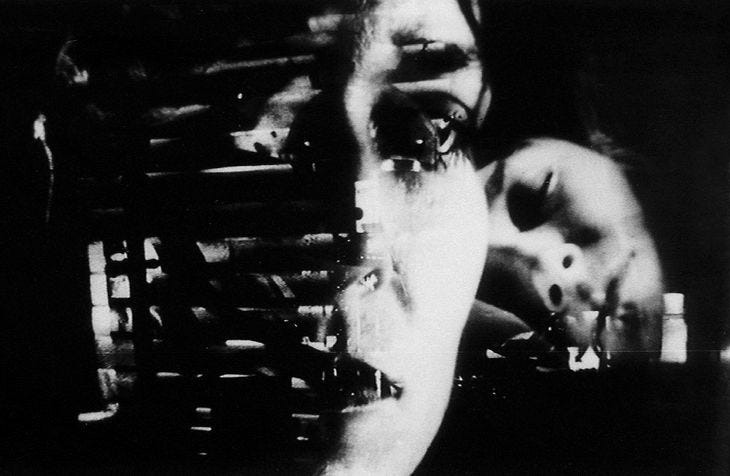
Scouring through Mubi’s library and discovering Peter Tscherkassky was another highlight of my year. Of his collection of experimental films I watched Get Ready (1999), Manufractur (1985), Dream Work (2001), and Motion Picture (Employees Leaving the Lumiere Factory) (1984). In the latter mentioned film, Tscherkassky creates a dadaist rendition of one of the earlies known recorded motion pictures, which of course was not well received, but I liked it. Tscherkassky is much like Merkas, Ono, Clarke, and Merkas in his structuralist approach to film and using the materiality of film as an avenue for storytelling. There’s much to learn from him and other structuralist filmmakers in the coming months.
Carol & Joy (2025)
Watching this 40 minute documentary about Carol Kane’s mother’s life, Joy Kane, shot on 16mm film was one of the more positively visceral experiences of my year. Films are myopic by nature. They offer a small peek at a life through a magnifying glass and often leave out context that can only be inferred or referred to. The mechanics of Carol & Joy uses this to its advantage by allowing the story to exist outside of the film used to record the anecdotes delivered by Carol and Joy who often continues with her story when the camera is out of film: Joy unbounds herself from the chassis of the image and through this paints a larger than film picture of her memories, her music and a life fully lived.

Shoutouts
To close this article, I want to shout out Kelly and Sam for delivering two beautiful short films last year, Running Shoes and About Sarah. You can watch Running Shoes here and I’m sure About Sarah will be available to watch on Vimeo/YouTube soon.